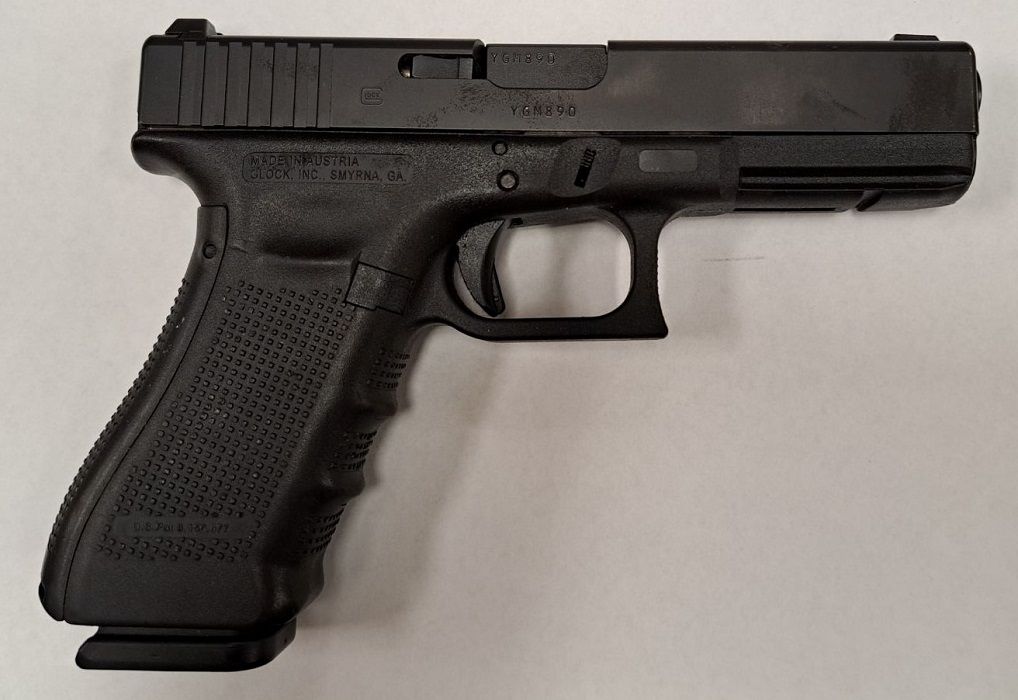
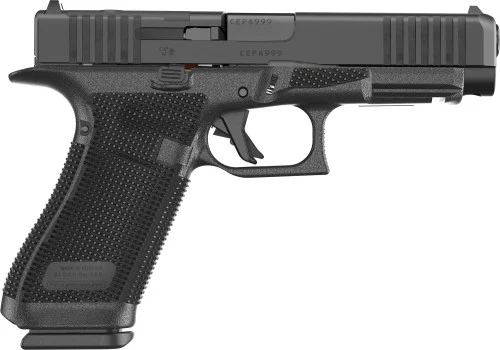
Glock connector angles: 3.5, 4.5, 5.5 and 8 lb explained
The connector is a bent strip of spring steel about an inch long that sits in a slot on the right side of the trigger housing. Its angled face is what the trigger bar's tab slides down at the break, and the angle of that face sets most of what you feel as trigger weight. Glock makes four; the aftermarket makes a dozen more. This guide explains what the angle does, what each connector measures, what the old and new names mean, and how to fit one in two minutes.
What the angle does
As the trigger bar moves rearward, its tab meets the connector's face and must be pushed down along it to release the striker. A face closer to vertical resists more, so the wall feels heavier and the break needs more force; a face leaning further back resists less. The connector does not touch the reset, the safeties or the striker; it only shapes the last fraction of the pull. That is why changing it changes the feel so much for so little.
The factory connectors
- Unmarked, about 5 pounds: the original standard connector, fitted through most of Gen 3 production. Many measure closer to 5.5 in practice.
- Dot, about 5.5 pounds: a revised profile introduced with Gen 4; the standard fit on Gen 4 pistols and on many Gen 3s since.
- Minus, about 4.5 pounds: marked with a minus sign; the factory fit on the 34, 35, 17L and the competition models. Glock's old catalog called it the 3.5 pound connector, and retailers still do, but with factory springs it measures around 4.5.
- Plus, about 8 pounds: marked with a plus; the New York connector, fitted with the NY1 or NY2 trigger spring module for agencies that want a heavy pull.
- Gen 5 connector: a minus-angle part shaped for the Gen 5 trigger bar; the factory fit on every Gen 5. Earlier connectors fit a Gen 5 housing and work, but the Gen 5 part is the one intended.
Why the number on the box is not the number on the gauge
The catalog weight is the connector's contribution with factory springs in a factory pistol, and the actual pull depends on the trigger spring, the striker spring, the firing pin safety spring, the polish of the parts and how much the pistol has been shot. A minus connector reads 4.2 in a smooth Gen 3 with a 6 pound trigger spring and 4.8 in a new Gen 5. Measure your own pistol with a gauge if the number matters; the connector sets the feel more than the figure.
Aftermarket connectors
Aftermarket connectors come at the minus angle and a little beyond, sold as 3.5 pound parts, and some are polished or coated to reduce friction. The other feature the aftermarket adds is an overtravel tab: a small projection that stops the trigger the instant the striker releases, so the finger does not keep traveling and the reset feels shorter. Tab connectors must be fitted so the tab does not stop the trigger before the striker releases, which the maker documents with a filing procedure; a tab set too early gives a dead trigger. Every connector we sell is a semi-automatic part; nothing here changes how many rounds fire per pull.
Connector and springs
The connector sets the wall; the springs adjust around it. A 6 pound trigger spring lightens the pull by a fraction; a reduced striker spring lightens it more and risks light strikes. The NY modules pair with the plus or dot connector by Glock's specification. The troubleshooting guide covers what happens when the combination is wrong.
Reading a used connector
A connector wears a shallow polished track where the tab rides, and a used one with a deep groove or a bright, rounded edge has been in a pistol for a long time and will give a break that wanders from shot to shot. Connectors cost little; replace one that shows a groove rather than trying to polish it out, and replace it if you cannot read the marking, since an unmarked worn part might be any of the four. A connector that has been filed by a previous owner is visible as a bright flat on the angled face and goes in the bin.
Fitting a connector
Unload, remove the magazine, check the chamber twice, field strip. Push out the trigger housing pin and lift the housing out of the frame with the bar attached. The connector sits in the slot on the outside right of the housing; lever it out from the bottom with a small screwdriver. Push the new one in, angled face to the rear, until it seats flush with the housing top. Put a drop of oil on the face. Reassemble and run the checks: trigger safety, firing pin safety, slam test on an empty chamber, reset, and a slow pull to feel the break come at the end. Then 100 rounds at the range.
Which connector for which pistol
- Carry: minus, or the Gen 5 connector, with factory springs; about 4.5 pounds.
- Duty under a policy: dot or plus as the policy states.
- Range and competition: minus or an aftermarket 3.5 with a tab, fitted per the maker's instructions.
- Nightstand pistol for a nervous hand: dot with an NY1 module, about 8 pounds.
The part the connector works against is described in the trigger bar guide, and the housing it sits in is covered in trigger housings and ejectors. Browse Glock connectors; they ship to your door.
General information, not legal advice. Current as of September 2026. Laws change; check the official source before you act.